
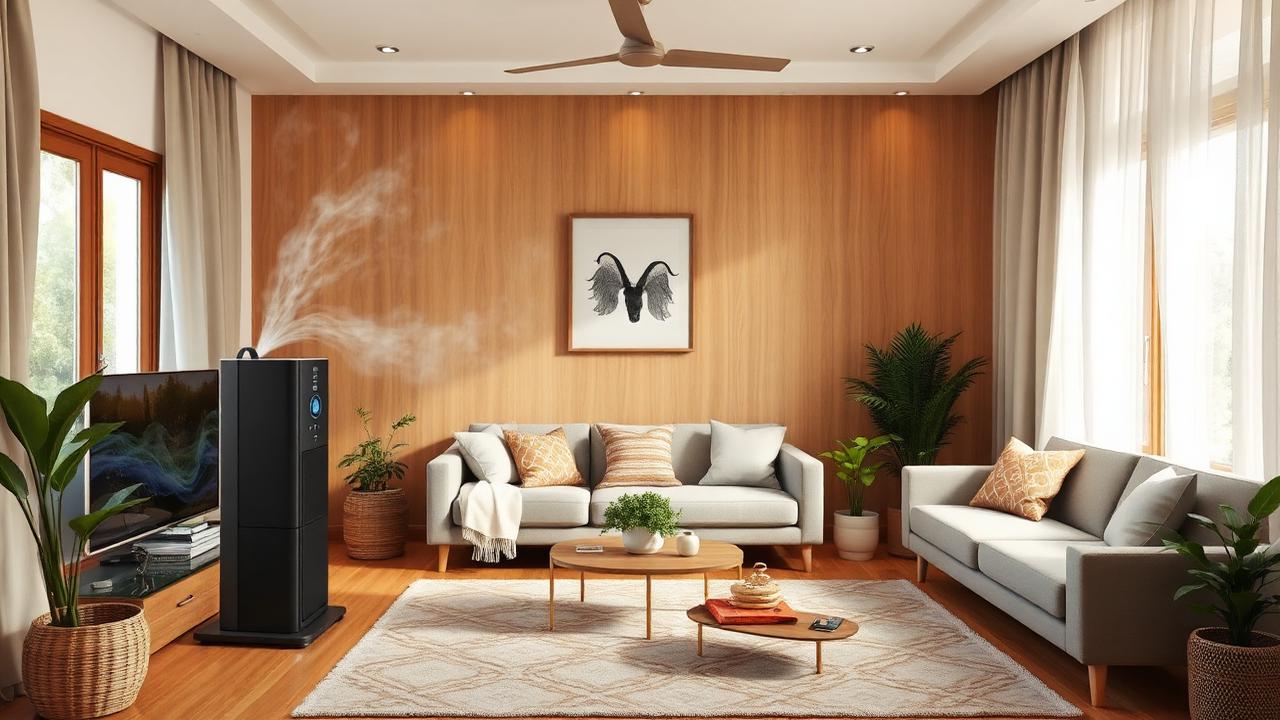
Alright, fellow city dwellers, let's talk about something we often take for granted – the very air we breathe. In bustling Indian metros, air pollution is not just a word; it's a daily reality. But fear not! Investing in a good air purifier can be a game-changer for your health and well-being, especially if you're battling allergies, asthma, or just want to breathe cleaner air at home.
The good news? You don't need to break the bank to get effective air purification. Today, we're diving deep into the Best Air Purifiers Under ₹10,000 in India for 2026. We've scoured the market, analyzed specifications, and considered user reviews to bring you top recommendations that offer a fantastic balance of performance, features, and affordability.
Why Do You Need an Air Purifier in India?
- High PM2.5 and PM10 Levels: Indian cities consistently rank among the most polluted globally. Air purifiers with HEPA filters are crucial for trapping these microscopic particulate matters.
- Allergies and Asthma: Pollen, dust mites, pet dander – these common allergens can trigger severe reactions. An air purifier helps remove them from your indoor environment.
- Odors and VOCs: From cooking smells to paint fumes and chemicals, air purifiers with activated carbon filters can neutralize these unpleasant odors and harmful volatile organic compounds (VOCs).
- Improved Sleep and Health: Breathing cleaner air can lead to better sleep quality and reduced respiratory issues over time.
So, let's clear the air and explore our top picks!
1. Philips 2000 Series Air Purifier (AC2887/20)
The Philips 2000 Series is a consistent performer and a favorite in the Indian market for good reason. It offers robust purification for medium to large rooms, making it a stellar choice under ₹10,000. It uses a multi-layer filtration system including a pre-filter, activated carbon filter, and a high-grade HEPA filter to tackle particles as small as 0.003 microns. Its CADR (Clean Air Delivery Rate) of 333 m³/h is impressive for its price point.
- ✅ Excellent CADR: Rapidly purifies air in rooms up to 44 sq. m.
- ✅ Advanced Filtration: HEPA and Activated Carbon for particles, allergens, and odors.
- ✅ Smart Features: Auto mode, silent mode, and real-time air quality display.
- ✅ Durable Build: Known for long-lasting performance.
- ❌ Filter Replacement Cost: Filters can be a bit pricier compared to some budget options.
- ❌ No Wi-Fi Connectivity: Lacks app control, which some modern users might prefer.
2. Coway Airmega 150 (AP-1019C)
The Coway Airmega 150, often dubbed the "Mighty," is a compact yet powerful air purifier that has gained cult status globally, and for good reason. While it sometimes hovers just above the ₹10,000 mark, you can often find it on sale within our budget. It features a Max2 filter system (combined activated carbon + True HEPA) which is incredibly effective against super-fine particles, odors, and VOCs. Its sleek design also makes it a stylish addition to any room.
- ✅ Exceptional Filtration: Max2 filter for superior removal of allergens, smoke, and chemicals.
- ✅ Compact Design: Smaller footprint, ideal for bedrooms and living rooms.
- ✅ Quiet Operation: Runs very silently, especially on lower settings.
- ✅ Filter Life Indicator: Conveniently tells you when to change filters.
- ❌ Slightly Higher Price Point: Can sometimes exceed ₹10,000, so keep an eye out for deals.
- ❌ Lower CADR: Compared to Philips AC2887, it's better suited for smaller rooms (up to 33 sq. m).
3. Blueair Blue Pure 211+ Auto
Blueair is a premium brand, and the Blue Pure 211+ Auto brings their unique approach to purification into our budget. Instead of a thick HEPA filter, Blueair uses a combination of electrostatic charging (called HEPASilent technology) and mechanical filtration, resulting in a very high CADR (up to 590 m³/h!) with remarkably quiet operation for large rooms. The fabric pre-filter is also washable, reducing replacement costs.
- ✅ Phenomenal CADR: Cleans large rooms (up to 50 sq. m) very quickly.
- ✅ HEPASilent Technology: Combines mechanical and electrostatic filtration for efficient, quiet operation.
- ✅ Washable Pre-filter: Reduces maintenance and recurring costs.
- ✅ Air Quality Sensor + Auto Mode: Adjusts fan speed based on detected pollution.
- ❌ Higher filter replacement cost (main filter): While pre-filter is washable, the main filter can be expensive.
- ❌ Takes up more space: Bulkier design compared to Coway.
Buying Guide: How to Choose the Best Air Purifier in India
Navigating the world of air purifiers can be tricky. Here's what to look for when making your decision:
- CADR (Clean Air Delivery Rate): This is arguably the most important metric. Measured in m³/h (cubic meters per hour), it indicates how quickly the purifier cleans a room of specific pollutants (dust, pollen, smoke). Higher CADR means faster cleaning. Match the CADR to your room size. A good rule of thumb is a CADR roughly 2/3rds of your room volume (Length x Width x Height).
- Room Size (Area Coverage): Manufacturers provide an "effective area" in square meters (sq. m). Ensure the purifier you choose is suitable for the room you plan to use it in. Going for a slightly higher coverage than required is always better.
- Filtration System & Types:
- Pre-filter: Traps larger dust particles, pet hair, extending the life of other filters.
- HEPA Filter (High-Efficiency Particulate Air): The most crucial filter, trapping 99.97% of particles as small as 0.3 microns (PM2.5, pollen, dust mites, mold spores). Always look for "True HEPA".
- Activated Carbon Filter: Essential for removing odors (cooking, smoke, pets) and harmful volatile organic compounds (VOCs).
- Cold Catalyst / UV / Ionizer: Some purifiers include these for additional purification (kill bacteria/viruses, break down chemicals). While beneficial, they are not as critical as HEPA and Carbon and some ionizers can produce ozone, which is an irritant.
- Operating Noise Level: Measured in decibels (dB). Especially important if you plan to use it in a bedroom. Anything below 50dB on the highest setting is generally good, and below 30dB on the lowest is ideal for sleeping.
- Filter Replacement Cost & Availability: Filters need periodic replacement (typically every 6-12 months). Research the cost and easy availability of replacement filters – this is a recurring expense!
- Features:
- Auto Mode: Adjusts fan speed based on air quality sensor readings.
- Sleep Mode/Night Mode: Low fan speed and dim lights for quiet operation.
- Timer: To set run time.
- Air Quality Indicator: Real-time display of pollution levels.
- Filter Change Indicator: Notifies you when filters need replacement.
- Energy Consumption: Air purifiers run for long hours, so check their power consumption (in Watts).
Comparison Table
| Feature | Philips 2000 Series (AC2887/20) | Coway Airmega 150 (AP-1019C) | Blueair Blue Pure 211+ Auto |
|---|---|---|---|
| CADR (PM2.5) | 333 m³/h | 246 m³/h | 590 m³/h |
| Effective Room Size | Up to 44 sq. m | Up to 33 sq. m | Up to 50 sq. m |
| Filtration Type | Pre-filter, Activated Carbon, True HEPA | Pre-filter, Max2 Filter (Carbon + True HEPA) | Washable Pre-filter, Particle + Carbon Filter (HEPASilent) |
| Noise Level (Min-Max) | 20.5-51 dB | 21-48 dB | 23-53 dB |
| Special Features | Smart Light Control, Air Quality Sensor, Auto Mode | Eco Mode, Filter Life Indicator, Air Quality Indicator | Washable Pre-filter, Auto Mode, Air Quality Sensor |
| Value for Money | Excellent overall performance for mid-large rooms. | Premium purification in a compact, quiet design. | Best for very large rooms, unique washable pre-filter. |
Frequently Asked Questions (FAQ)
Q1: How often do I need to replace the filters?
A1: Generally, pre-filters can be cleaned monthly and replaced every 1-2 years. HEPA and activated carbon filters usually need replacement every 6-12 months, depending on usage and air quality. Always check the manufacturer's recommendations for your specific model.
Q2: Should I keep my air purifier running all the time?
A2: For optimal air quality, yes, it's recommended to keep it running for several hours a day or even continuously, especially in areas with high pollution. Most modern purifiers are energy-efficient enough for continuous use.
Q3: Do air purifiers remove viruses and bacteria?
A3: True HEPA filters can trap airborne particles as small as 0.3 microns, which includes many types of bacteria and viruses, especially those associated with larger droplets. Some purifiers also include UV-C lights or other technologies specifically targeting microbes, but HEPA is the primary defense.
Q4: Can an air purifier help with pet dander and odors?
A4: Absolutely! Pre-filters are great for capturing pet hair and larger dander. A good HEPA filter will tackle the smaller airborne dander, while an activated carbon filter is highly effective at neutralizing pet odors.
There you have it! Our top picks and detailed guide to help you breathe easier and make an informed decision on the best air purifier under ₹10,000 in India for 2026. Prioritize your health – clean air is not a luxury, it's a necessity!
Tags: air purifier, health, pollution
Originally published on Compare Before You Buy — India's trusted price comparison platform for Amazon, Flipkart, Myntra & more.